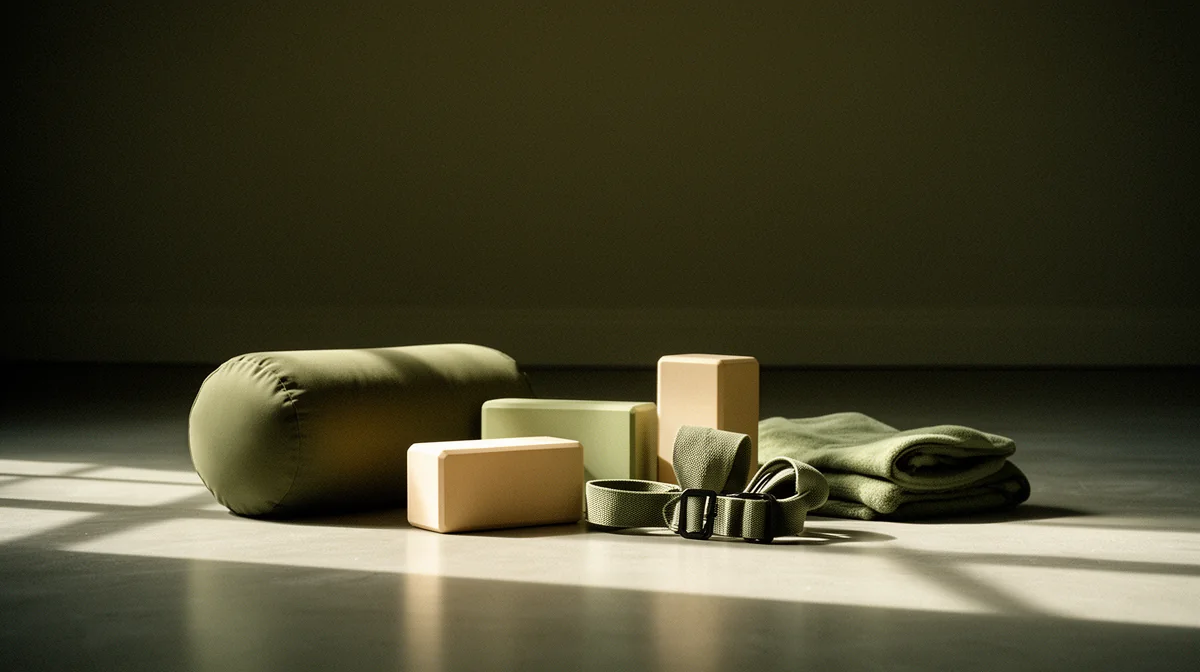
Props and Modifications: Bringing the Pose to You
Blocks, straps, and bolsters aren't training wheels — they change the geometry of a pose so today's body can do the pose's actual work.
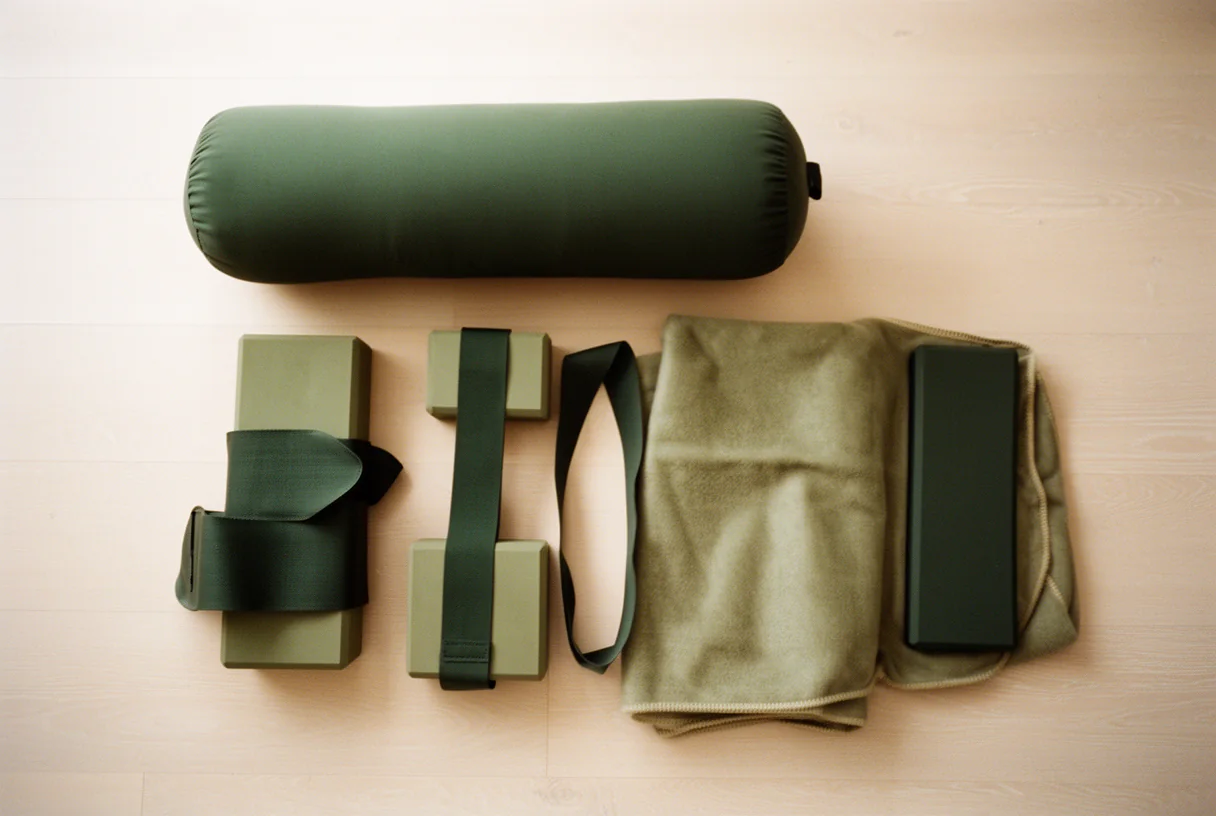
There's a quiet misunderstanding that follows props around: that they're remedial, the yoga equivalent of water wings, to be outgrown as quickly as possible. B.K.S. Iyengar — who introduced most of them — had the opposite idea. Props change the geometry of a pose so that the shape is available to your body today, which means the muscles that the pose is actually for can do their work instead of being drowned out by whatever is tightest.
A block under the hand in Triangle isn't an easier Triangle. It's a Triangle where your spine is long enough to rotate, which is the entire point of the pose. The strained, floor-touching version with a collapsed side waist is the modification — it just doesn't look like one.
The core principle: find the work, not the shape
Every pose has work it's trying to do — lengthen the hamstrings, open the chest, load the standing leg — and a textbook shape that demonstrates that work in a body with average-or-better mobility. When the shape is out of reach, you have two options: distort other joints to fake the shape, or adjust the geometry so the work happens honestly. Props are option two.
The test is always the same: can you breathe smoothly and feel the effort where the pose intends it? If the answer is yes on a block and no without, the block version is the more advanced practice, because it's the one teaching your body something true.
A block under the hand doesn't shrink the pose — it lets the pose meet you honestly.
The big three, and what they're each for
Blocks raise the floor. Any time the hand can't reach the ground without the spine rounding or the chest collapsing — Triangle, Half Moon, lunges, folds — a block under the hand restores the pose's proportions. Blocks also build: squeezed between the thighs in Bridge or Chair they wake up the inner legs; under the sacrum they turn Bridge into a supported rest. (Full guide: How to Use Yoga Blocks.)
Straps extend your arms. In seated folds, reclined hamstring stretches, and binds, the strap lets you hold the pose at the length your body actually has, with a long spine, instead of rounding to grab a foot you can't reach. The strap version stretches the hamstrings; the rounded-grab version mostly stretches your lower back's patience. (Full guide: How to Use a Yoga Strap.)
Bolsters let go for you. Restorative shapes work by holding the body so completely that the muscles have no job left. Knees over a bolster in Savasana, chest over one in a supported fold, back over one in a gentle heart opener — support isn't a lesser version of these poses, it is the pose.
Honorable mention: a folded blanket, the most versatile prop in the building — under the knees, under the hips in seated poses, under the head in rest, over you in Savasana.
Reading your own body's signals
Modification isn't only about reach. It's the response to three different signals, and they call for different answers:
- Muscle stretch — broad, warm, fades when you ease off. This is the work; stay and breathe.
- Joint pain — sharp, local, pinchy, especially in knees, wrists, shoulders, or the lower back. This is information, not progress. Change the geometry (prop, angle, range) or skip the pose entirely. No pose is load-bearing for your life.
- Nothing at all — the pose may be hiding. A block between the thighs, a slower entry, or a deeper variant can switch it back on.
Every pose in our catalog carries variants — easier, harder, prop-supported, and injury-aware adaptations — exactly because the right version of a pose depends on whose body is doing it. Check them before you push through a shape that argues back; if you've flagged an accommodation, generated flows already route around contraindicated poses.
A starter kit, honestly
If you're equipping a home practice from zero: two cork or foam blocks and a strap, maybe forty dollars all in, cover the overwhelming majority of prop use. Add a bolster when restorative practice becomes a habit rather than an intention. The gear picks alongside this article are the ones we'd actually buy — and household stand-ins (thick books, a bathrobe belt, couch cushions) are legitimate until then.
The mark of an advanced practitioner isn't an empty mat. It's knowing exactly which prop turns today's body into the one the pose was designed for — and reaching for it without a flicker of apology.
Keep reading
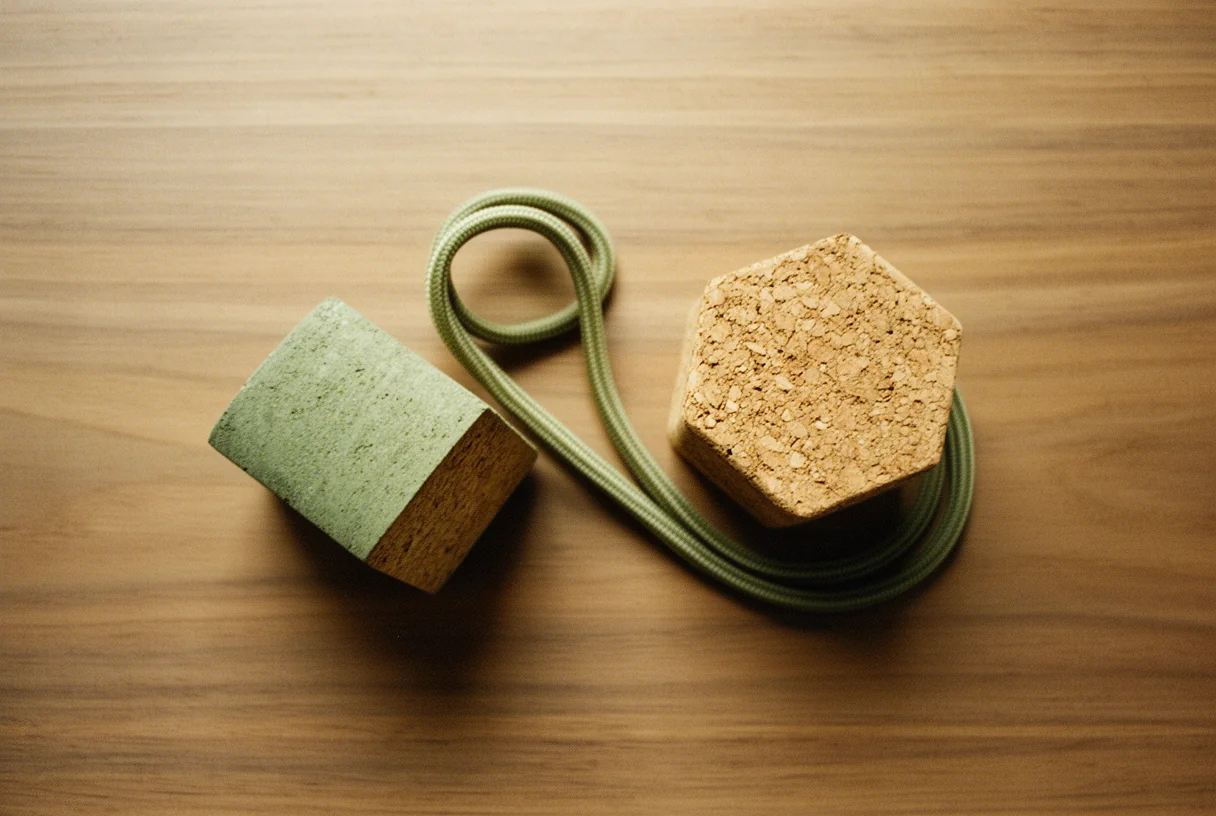
How to Use Yoga Blocks: The Floor, Raised to Meet You
The most versatile prop on the shelf — eight ways to use blocks across standing poses, folds, strength work, and rest, plus how to choose between foam
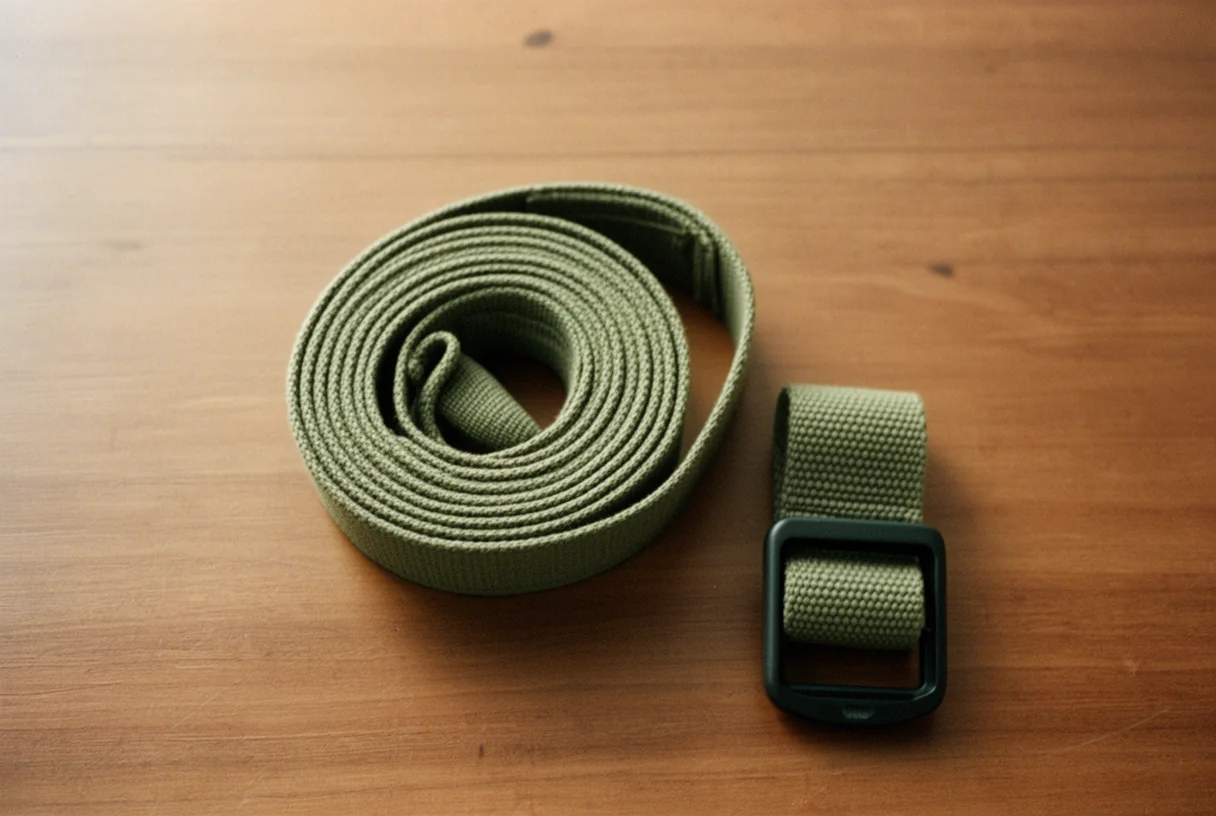
How to Use a Yoga Strap: Longer Arms, Honest Folds
The cheapest prop does the most surgical work — seated folds, shoulder openers, reclined hamstring stretches, and binds, with the spine kept long the
Anatomy of a Sun Salutation
Surya Namaskar A, pose by pose — what each shape does, how the breath links them, and the mistakes that make it harder than it needs to be.