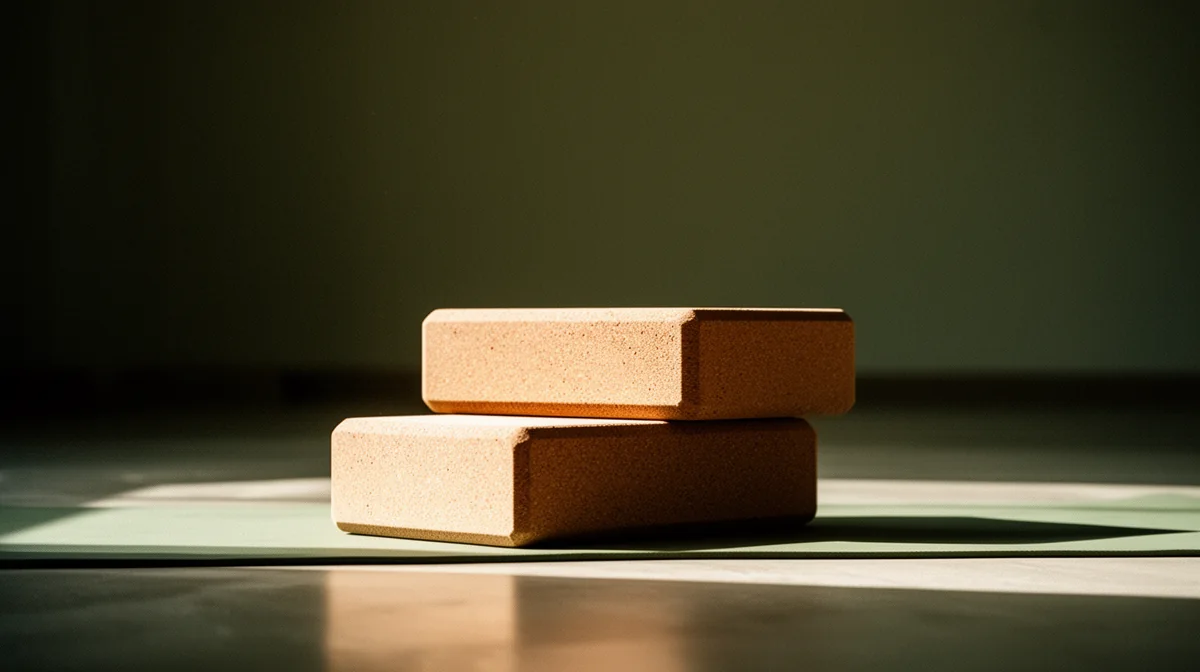
How to Use Yoga Blocks: The Floor, Raised to Meet You
The most versatile prop on the shelf — eight ways to use blocks across standing poses, folds, strength work, and rest, plus how to choose between foam and cork.
If you only ever buy one prop, buy two blocks. No other piece of gear changes as many poses for as many bodies: blocks raise the floor in standing work, support the spine in rest, add load in strength work, and teach alignment that words can't. The trick is knowing that a block has three heights — lying flat, on its long edge, standing tall — and that almost every use below starts with choosing the right one.
The big idea: raise the floor
Most block use comes down to a single move: when a pose asks your hand to reach the ground and your body says "not today," you bring the ground up instead.
Triangle (Trikonasana). Block at its tall or middle height outside the front shin, hand on the block, and suddenly the chest can rotate open instead of collapsing toward the floor. The pose's actual work — the long side waist, the open chest — switches on the moment the reaching stops.
Half Moon (Ardha Chandrasana). Place the block tall about a foot in front of the standing foot's pinky toe before you enter. With the floor twelve inches closer, the balance becomes about the standing hip — the real subject of the pose — rather than a desperate hamstring negotiation.
Low Lunge and Lizard. A block under each hand turns a cramped, collapsed lunge into one with a long spine and room for the hips to sink. Same pose, completely different conversation.
Standing folds in transit. Blocks under the hands in Halfway Lift give you the flat back the pose is named for — especially valuable inside sun salutations, where tight hamstrings otherwise round every single rep.
The block isn't between you and the full pose — it's the most direct path to it.
The supporting cast of uses
Between the thighs: instant alignment teacher. A block squeezed lightly between the upper thighs in Chair, Bridge, or Forward Fold wakes up the inner legs and stops the knees from splaying. Many alignment cues that take a paragraph to say take one block to feel.
Under the sacrum: supported Bridge. From Bridge pose, slide a block (start at the lowest height) under the sacrum — the flat triangular bone at the base of the spine, not the lumbar curve — and rest the full pelvis on it. Two minutes here is one of the great nervous-system bargains in yoga.
Under the seat: honest sitting. Sitting cross-legged on a flat block tips the pelvis forward enough to let the spine stack without effort. If meditation or seated breathing makes your back ache, this is usually the entire fix.
Under the chest or head in rest. A block under the sternum in supported fish, or under the forehead in Child's Pose when the floor is far away — small supports that let a resting pose actually rest.
Foam or cork?
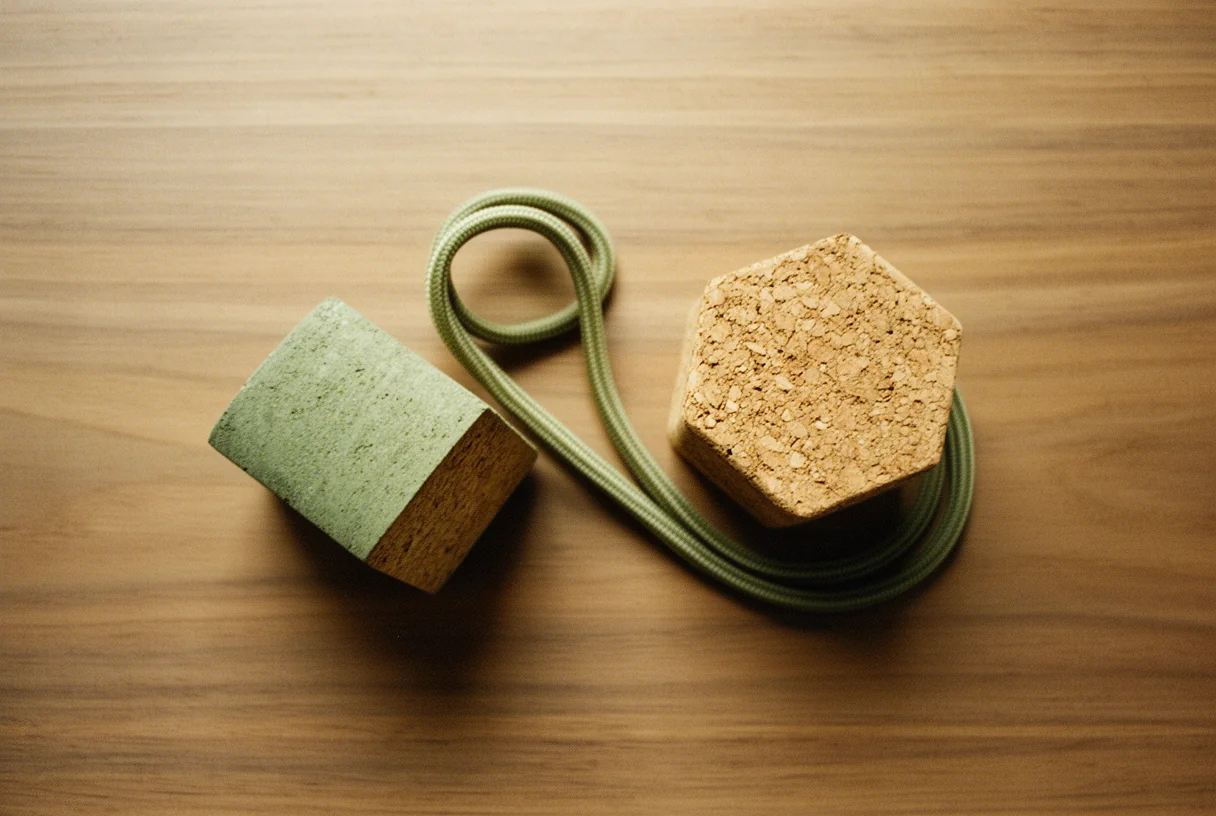
Foam is light, soft-edged, forgiving under the sacrum and seat, and cheap. Its weakness is squish: at full extension under a hand it compresses slightly, which balance poses notice. Cork is heavier and grippier with a satisfying solidity under the hand — the better choice for standing-pose support — but less pleasant under bony landmarks. The boring truth: foam for restorative-leaning practices, cork for standing-heavy ones, and either is fine for years. Wood looks beautiful on a shelf and is loud, slippery, and unforgiving on a mat.
Get two. Pairs matter — hands come in twos, and the asymmetric uses (one under the sacrum, one between the thighs) often run simultaneously.
What blocks are quietly teaching
The deeper value of blocks isn't comfort; it's honesty. A block under the hand reports exactly how much range you had today, without the spine borrowing range from rounding or the chest paying for it by collapsing. Practiced this way, the block isn't between you and the full pose — it's the most direct path to it: the version of Triangle you build on a block, with rotation and length intact, is the one that eventually stands on the floor with the same integrity.
Start with the picks below if you're buying; thick hardcover books are a legitimate stand-in while you decide.
Keep reading
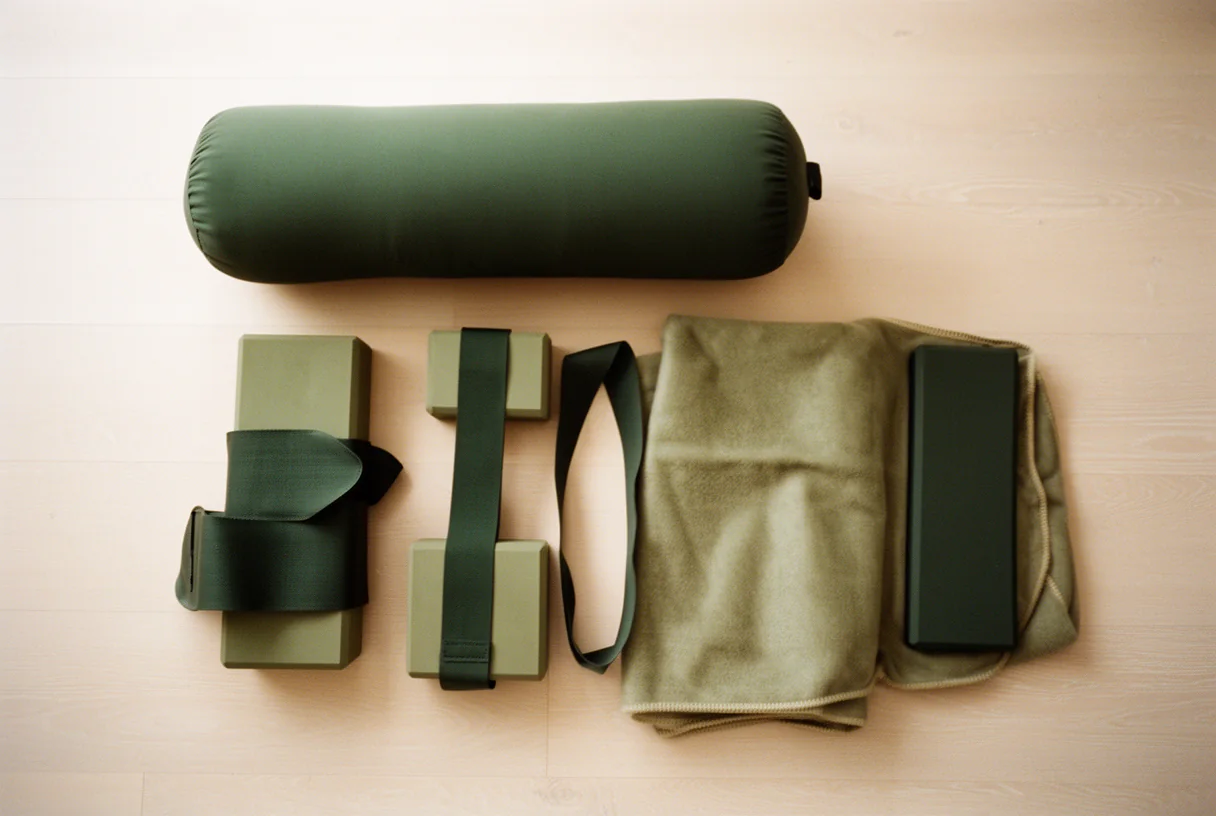
Props and Modifications: Bringing the Pose to You
Blocks, straps, and bolsters aren't training wheels — they change the geometry of a pose so today's body can do the pose's actual work.
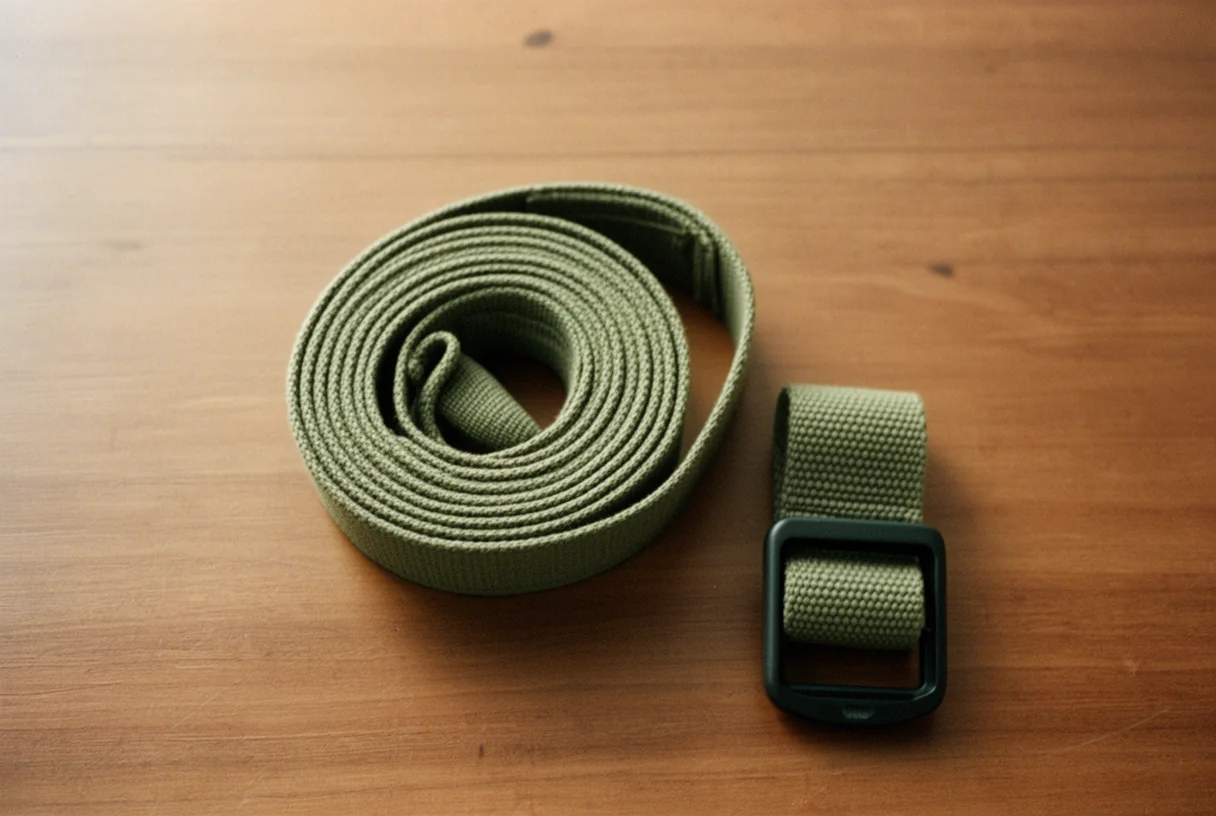
How to Use a Yoga Strap: Longer Arms, Honest Folds
The cheapest prop does the most surgical work — seated folds, shoulder openers, reclined hamstring stretches, and binds, with the spine kept long the
Anatomy of a Sun Salutation
Surya Namaskar A, pose by pose — what each shape does, how the breath links them, and the mistakes that make it harder than it needs to be.