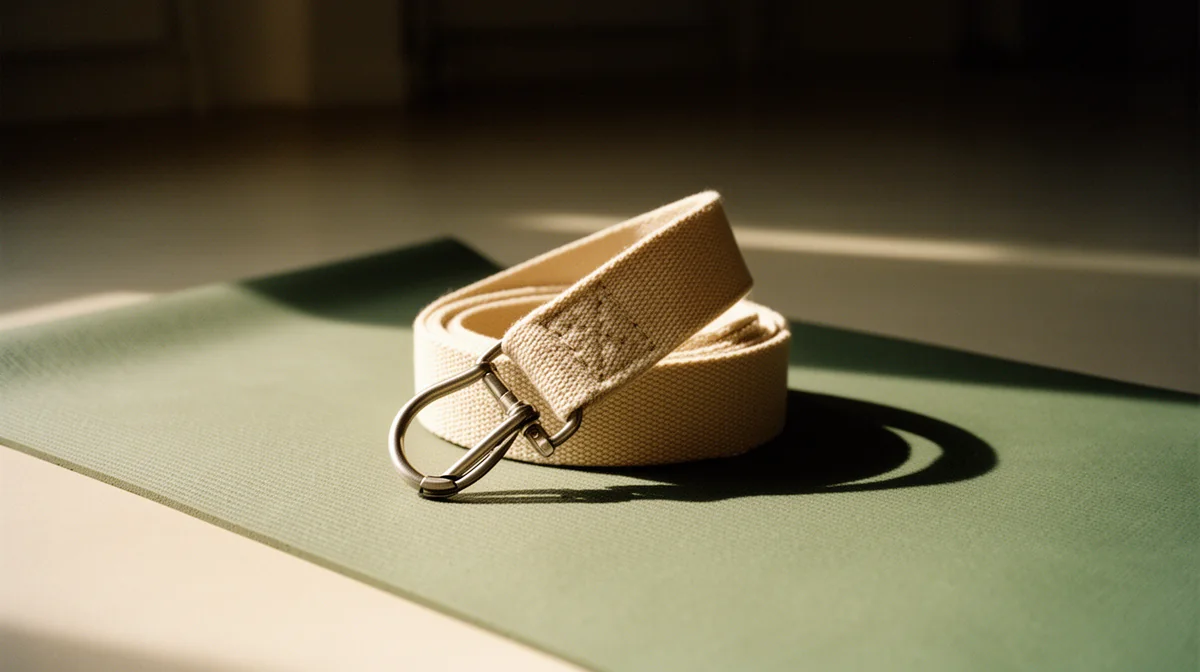
How to Use a Yoga Strap: Longer Arms, Honest Folds
The cheapest prop does the most surgical work — seated folds, shoulder openers, reclined hamstring stretches, and binds, with the spine kept long the whole way.
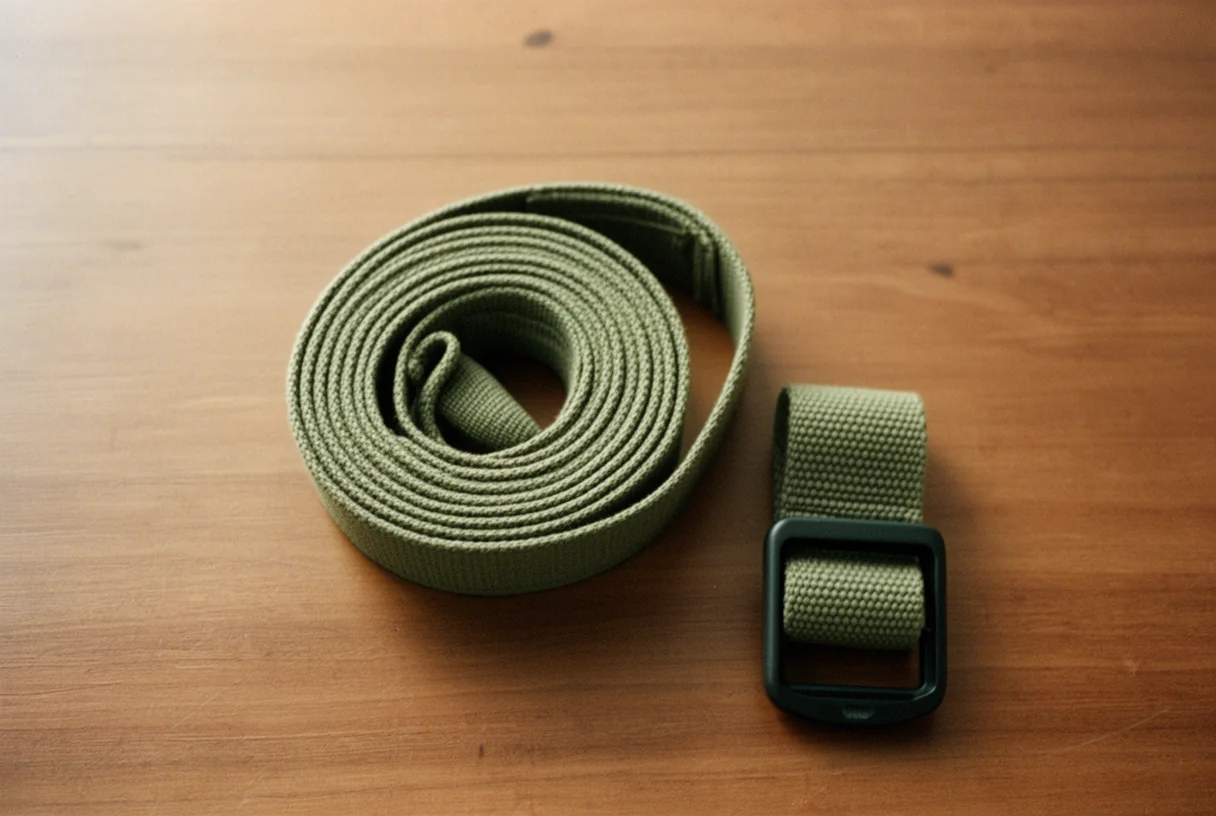
A strap costs less than lunch and solves one of the most common dead-ends in practice: the pose you can't reach. Folds where the hands don't meet the feet, binds where the fingers miss each other by a province, hamstring stretches that turn into lower-back stretches the moment you grab for the toes — all of them are reach problems, and a strap is six to ten feet of additional reach with none of the compromise.
The principle in one line: the strap lets you hold a pose at the length your body actually has, with a long spine, instead of rounding to fake a length you don't.
The flagship: reclined hamstring stretch
If a strap did only this, it would earn its place. Lie on your back, loop the strap around one mid-foot, hold an end in each hand, and let the leg rise to wherever it goes with the knee soft. The other leg stays long on the floor, the head and shoulders stay heavy.
This is the best hamstring stretch most bodies have access to, for a structural reason: lying down takes the lower back out of the equation entirely. There's no fold to cheat, nothing to round — every degree of stretch lands in the hamstring. Three minutes a side, breathing slowly, beats almost any standing fold for pure hamstring change. Sweep the leg gently out to the side (strap in the same-side hand) and the inner line gets its turn.
The strap lets you hold the pose at the length your body actually has — with a spine you'll still like tomorrow.
Seated folds without the round-and-grab
In Seated Forward Fold or Head-to-Knee pose, loop the strap around the foot and walk your hands down it until the arms are long and the spine is, too. Then hinge from the hips — the strap takes the reaching job, so the fold can be a fold instead of a slump. You'll feel the difference immediately: the stretch moves out of the lower back and into the backs of the legs, where the pose intended it.
The rule for depth: go to where the breath stays smooth, hold, and let the exhales walk your hands down the strap one finger-width at a time. Centimeters won this way are real; centimeters grabbed by rounding are borrowed from your spine.
Shoulders: the flossing stretch
Hold the strap wider than shoulder width in front of you, arms straight. Inhale the strap overhead; exhale it behind you as far as comfortable; reverse. If the elbows want to bend, your grip is too narrow — slide the hands wider until the circle is smooth. Ten slow passes and the shoulders have been through more honest range than most full classes provide. (This is where a longer strap — eight to ten feet — stops being a luxury.)
Two more shoulder uses worth knowing: in Cow-Face arms, the strap dangled from the top hand gives the bottom hand something to climb instead of leaving the pose to the lucky few whose fingers touch. And in binds (Marichyasana, bound side angle), the strap bridges the gap between hands so you get the bind's chest-opening rotation years before the fingers meet.
Quieter uses
Dancer pose. A strap looped around the back foot, elbow eventually pointing up, turns Dancer from a hamstring-of-the-standing-leg test into the backbend-and-balance it's meant to be.
Legs that wander in rest. A strap snugged around the mid-thighs in Savasana or supported Bridge lets the leg muscles stop holding the legs together — a small, strange, real release.
Carrying the mat. Loop each end around a rolled mat. Not transcendent; just handy.
Buying notes
Cotton straps are soft, grippy, and right for almost everyone. The classic D-ring buckle holds a loop at any size you set, which matters for the reclined stretches and Savasana uses; quick-release plastic buckles are fine but trust them less under tension. Six feet is standard and adequate; eight to ten feet is the better buy if shoulder work or taller-than-average bodies are involved. There is no premium strap technology worth paying for — the picks below are just well-made versions of a simple thing. A bathrobe belt is the time-honored stand-in, slightly short and slightly slippery, but real.
A strap will never trend on anyone's feed. It will quietly give you the honest version of every fold you practice for the next decade. Pound for pound, nothing on the shelf comes close.
Keep reading
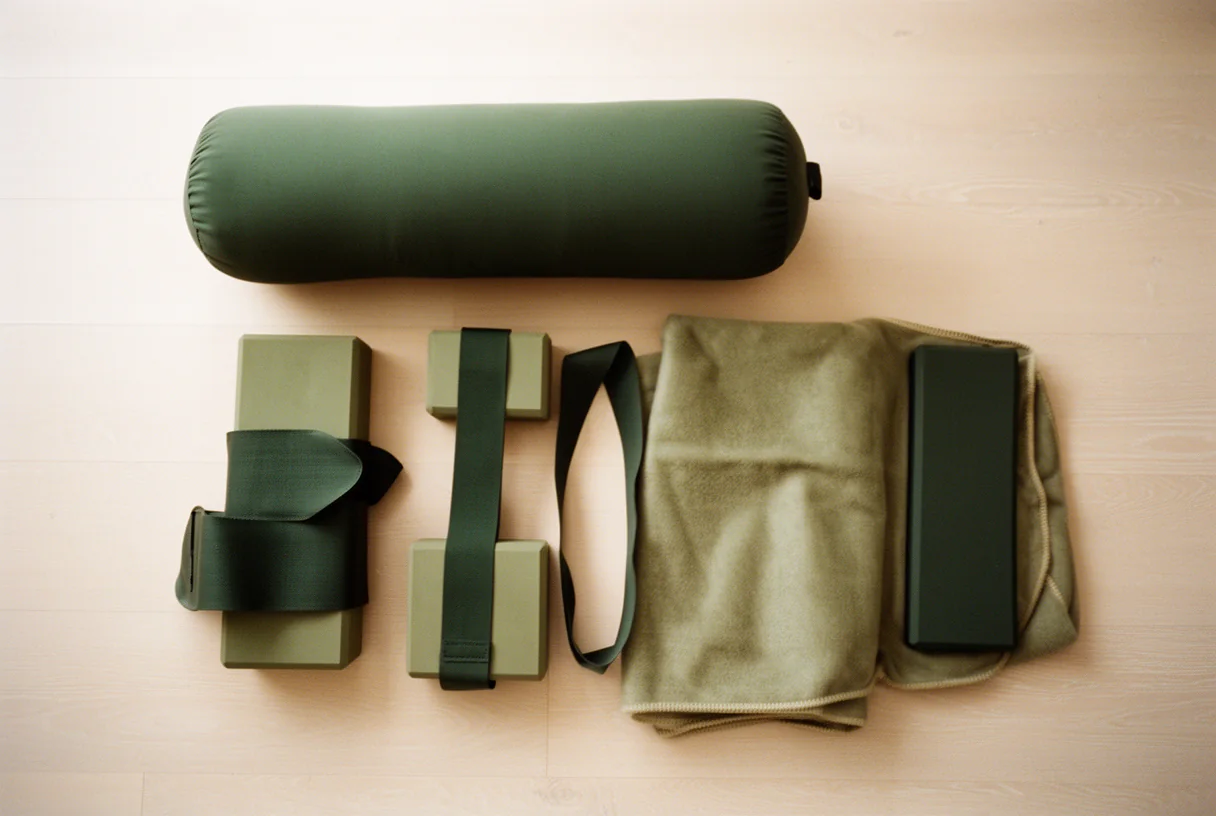
Props and Modifications: Bringing the Pose to You
Blocks, straps, and bolsters aren't training wheels — they change the geometry of a pose so today's body can do the pose's actual work.
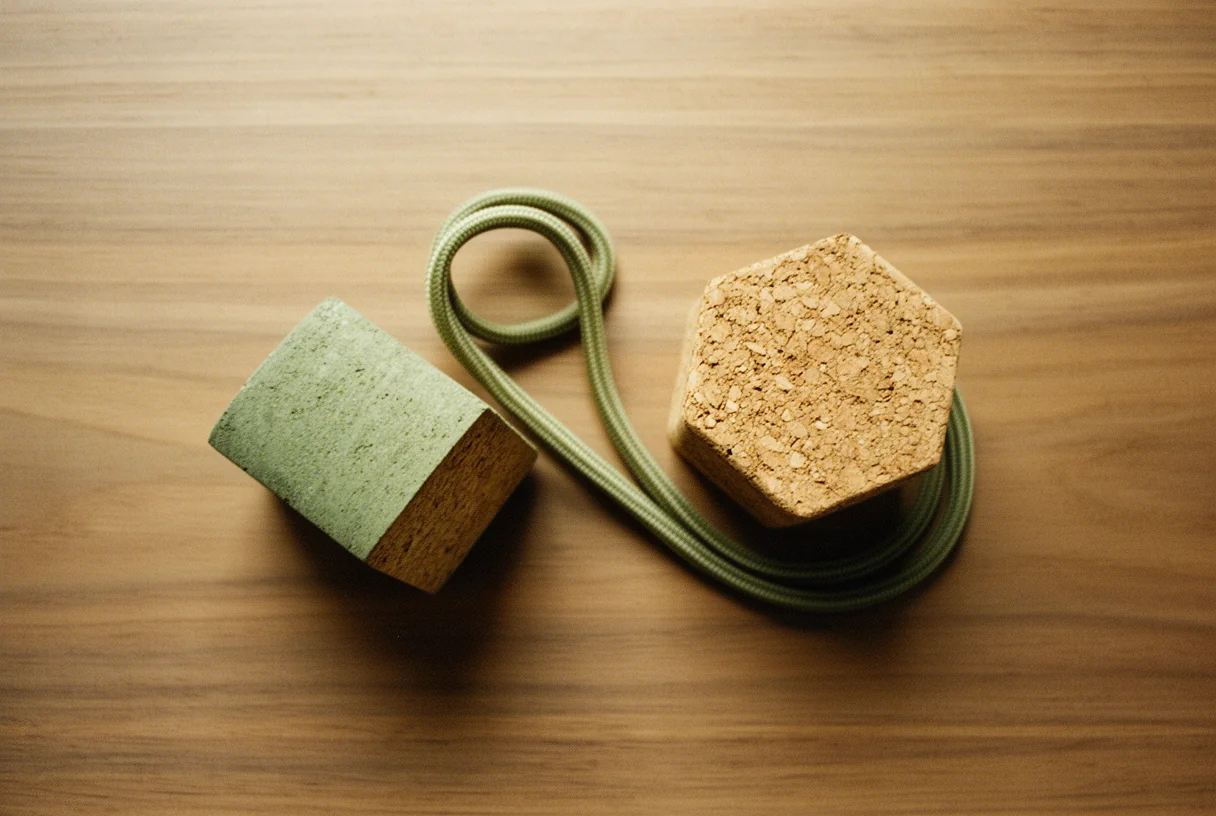
How to Use Yoga Blocks: The Floor, Raised to Meet You
The most versatile prop on the shelf — eight ways to use blocks across standing poses, folds, strength work, and rest, plus how to choose between foam
Building a Home Practice That Actually Survives
How to keep a steady practice when it's just you and a mat — short, frequent, forgiving, and engineered so that starting is the easy part.