Building a Home Practice That Actually Survives
How to keep a steady practice when it's just you and a mat — short, frequent, forgiving, and engineered so that starting is the easy part.
A home practice survives on consistency, not duration. Ten honest minutes most days beats the ninety-minute session you keep postponing, and it isn't close: frequency is what teaches the body, builds the habit loop, and makes the mat feel like furniture instead of an appointment. The whole game is making starting cheap.
Engineer the start, not the workout
Every habit researcher lands on the same boring, correct advice: shrink the activation energy. For a home yoga practice that means:
Pick a fixed anchor. Same time, same corner of the room — after the morning coffee, before the shower, when the kids are down. The decision "will I practice today?" is the expensive part; an anchor pre-pays it. You're not deciding anymore, you're just doing the next thing in the sequence of your day.
Leave the mat out. A rolled mat in a closet is a small errand standing between you and practicing. An unrolled mat in the corner is an invitation you trip over. If aesthetics object, a folded blanket on a rug works the same trick.
Decide the minimum, not the maximum. Commit to ten minutes. Some days that's all it is, and that counts in full. Most days, ten minutes turns into twenty once you're warm — but the deal you made with yourself was ten, so every session ends as a kept promise instead of a shortfall.
The practice is the return, not the streak — a missed day carries zero interest.
Let the practice match the day
The fastest way to kill a home practice is to make it a fixed routine you must perform regardless of state. Your energy is different on Monday morning and Friday night; the practice should be too.
This is exactly what flow generation is for: tell it you're depleted and you get a floor-based unwind; tell it you're wired and you get something that burns the static off. Save the flows that land — your saved list becomes a menu of moods, and on low-motivation days "press play on the restorative one I already like" is about as cheap as starting gets.
When you don't know where to begin at all, the pose of the day is a perfectly good warm-up: one shape, three minutes of attention, and you're already practicing.
A structure when you want one
A complete short practice has the same skeleton as a full class, just compressed:
- Arrive (1–2 minutes). Sit or stand still, eyes soft, and take five slow breaths. This is the line between "exercising in my living room" and "practicing."
- Warm the spine (2–3 minutes). Cat-cow, easy twists, a slow sun salutation with bent knees.
- One thing with substance (3–10 minutes). A couple of standing poses, a balance, a hip opener — whatever today's body asked for.
- Downshift (2–3 minutes). A fold, a gentle twist on the floor, legs up the wall.
- Rest (at least 2 minutes). Savasana is not optional garnish; it's where the nervous system files what you just taught it.
The psychology of missing days
You will miss days. The practice is the return, not the streak. A streak mindset means one skipped Tuesday converts into "I've failed, I'll restart properly next month" — the classic abandonment arc of every January habit. A return mindset means a missed day carries zero interest: the next session is just the next session.
Two reframes that help:
- Never miss twice. One day off is rest; two starts a new default. The rule isn't "always practice," it's "always come back tomorrow."
- Log returns, not streaks. If you track anything, track how many times you came back after a gap. That's the skill that keeps a practice for decades.
What you actually need
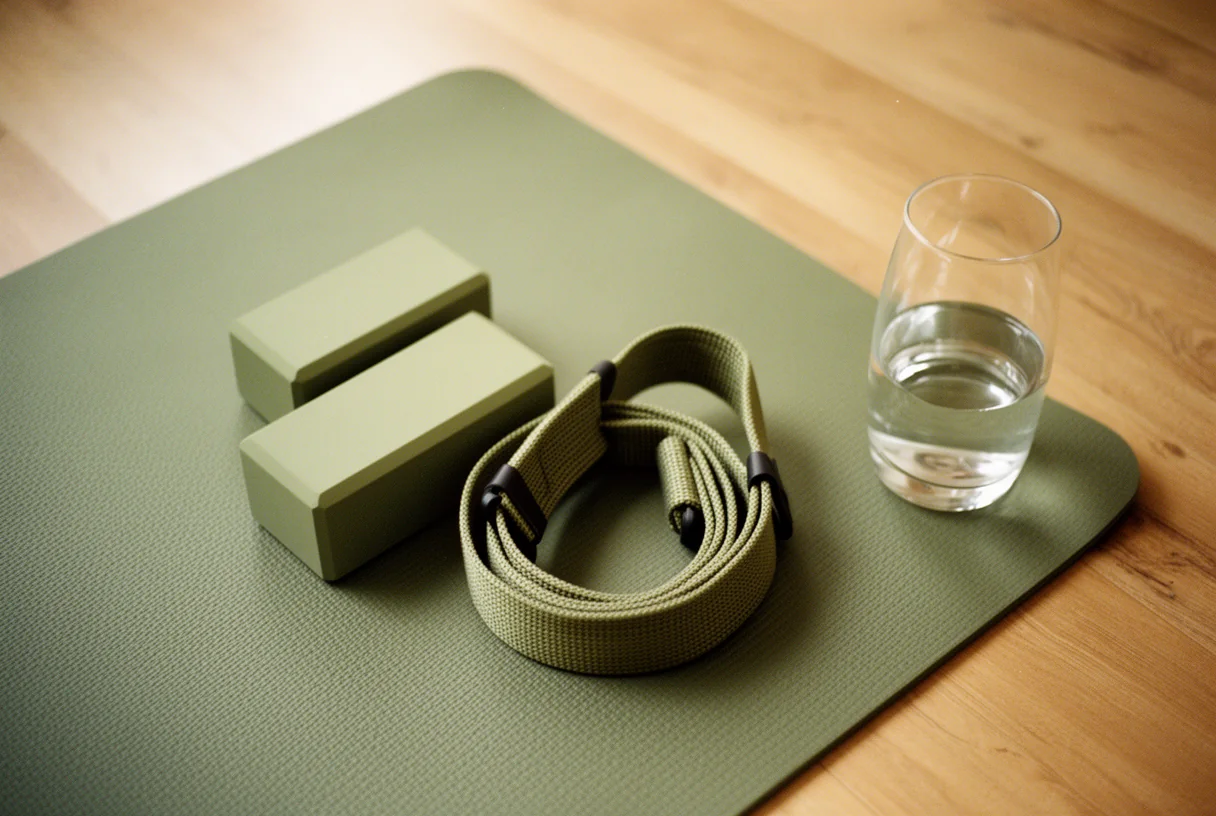
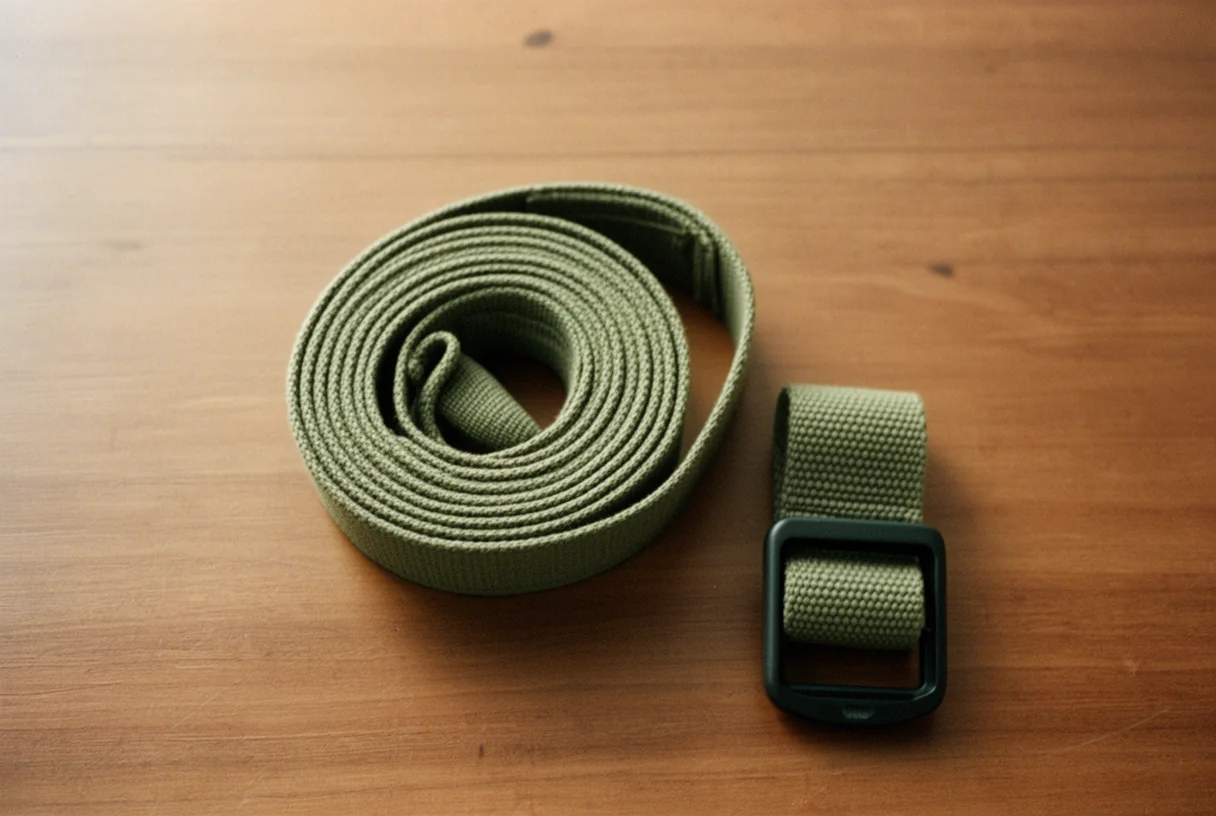
A mat, honestly, and not even that on carpet. A strap (or a bathrobe belt) and two blocks (or fat books) cover ninety percent of prop use at home, and they earn their shelf space the first time tight hamstrings meet a seated fold — there's a whole guide to each in the gear series. Skip everything else until a specific pose asks for it.
What you don't need: a dedicated room, an hour, a flexible body, or a good day. Ten minutes, the corner by the bookshelf, the body you woke up with. That's a home practice. The rest is repetition.
Keep reading
Breath as the Anchor: Three Patterns That Change Your Practice
Why the breath leads the movement, what your nervous system does with it, and three breathing patterns — ujjayi, even breath, extended exhale — to pra
Anatomy of a Sun Salutation
Surya Namaskar A, pose by pose — what each shape does, how the breath links them, and the mistakes that make it harder than it needs to be.
How to Use a Yoga Strap: Longer Arms, Honest Folds
The cheapest prop does the most surgical work — seated folds, shoulder openers, reclined hamstring stretches, and binds, with the spine kept long the