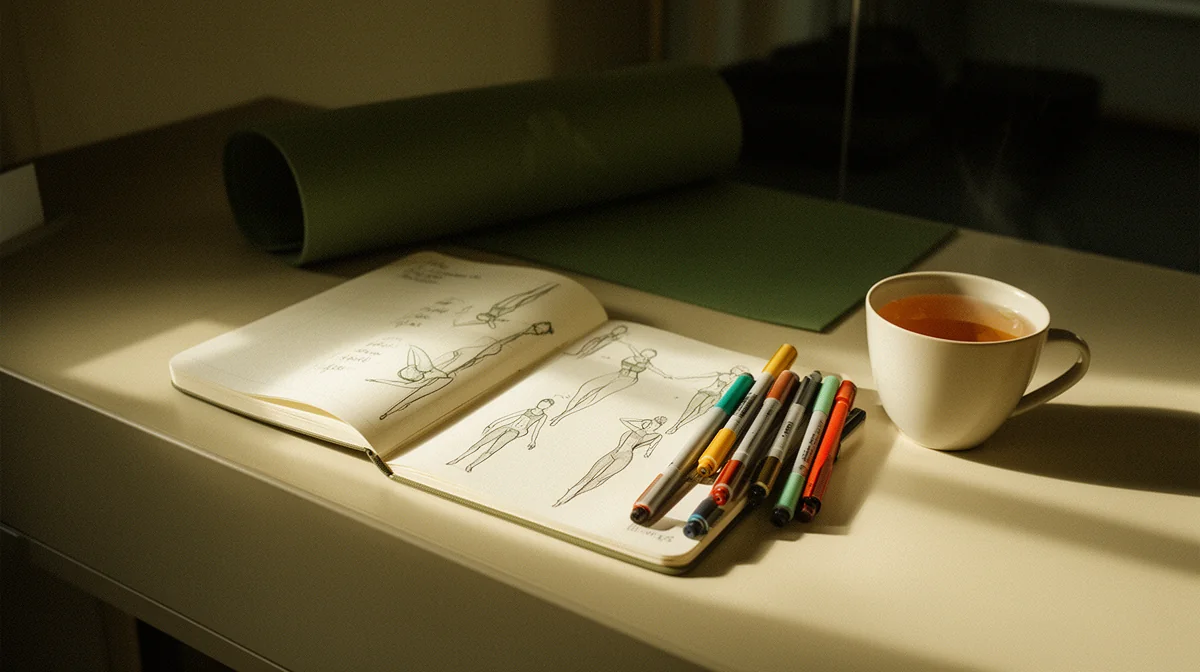
Sequencing: Arc, Peak, and the Class That Feels Inevitable
How to build a class that earns its peak and lands its rest — choosing the peak first, reverse-engineering the warm-up, and pressure-testing the arc.
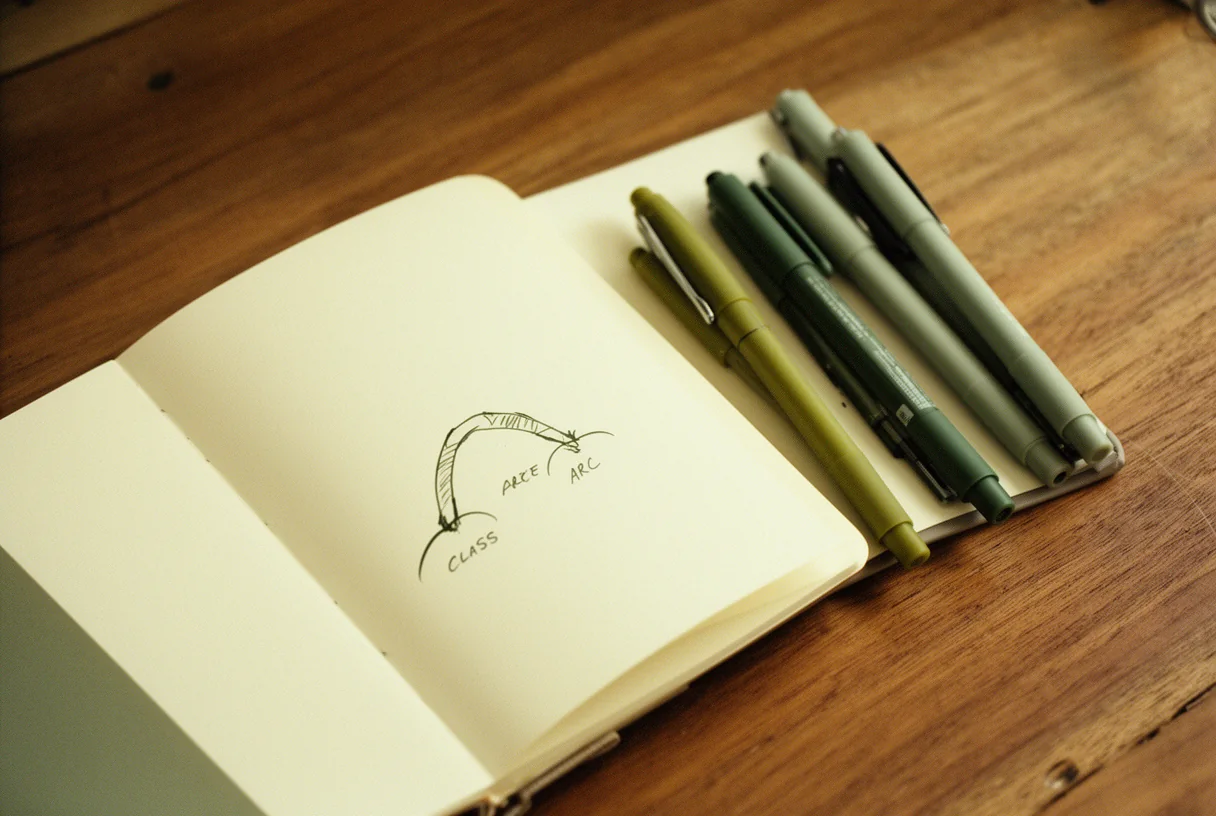
A well-sequenced class has an arc: it warms exactly what the peak will demand, builds intensity in stages, opens into the peak, then unwinds with counterposes toward a rest the body has actually earned. When students say a class "flowed" or "felt complete," this architecture is almost always what they're describing — and when a class feels disjointed, the diagnosis is almost always an un-earned peak or a missing descent.
The good news is that sequencing is a craft with a method, not a talent you either have or don't.
Start at the peak and work backwards
The single most useful habit in class planning: choose the peak first, then reverse-engineer everything before it.
Take the peak pose apart into its component demands. Half Moon, for example, requires: weight-bearing balance on one leg, open hamstrings on the standing side, hip abduction strength, an open chest in rotation, and enough proprioception to find the floor with confidence. That decomposition is your warm-up plan — each demand gets rehearsed earlier in class at lower intensity:
- Balance on one leg → Tree, early and unhurried
- Standing-leg hamstring length → Pyramid or Triangle
- Hip and rotation pattern → Warrior II and Extended Side Angle, which are Half Moon with the floor still attached
- Confidence finding the floor → a block placed and waiting before the attempt
By the time Half Moon arrives, every piece of it has already happened once. The pose feels less like a test and more like a conclusion.
Every strong class is a story: it rises, it peaks, and it sets the body down gently.
Staging the climb
Between the warm-up and the peak, intensity should climb in borrowed steps — each section reusing and extending material from the one before. Cold jumps are what students experience as disjointedness: a deep backbend out of nowhere, a balance demanded before the feet have woken up.
A reliable build for a 60-minute class:
- Arrive and warm (10 min): breath, spinal movement, sun salutations at half pace.
- Foundation standing work (12 min): the workhorse poses that rehearse the peak's components.
- Build (12 min): the same patterns, deeper or balanced or linked into longer holds.
- Peak window (8 min): two attempts with a breather between — the first attempt is information, the second is the pose.
- Descent (10 min): counterposes, floor work, the body unwinding in the reverse order it was wound.
- Rest (8 min): longer than feels efficient. The rest is where the class consolidates.
The proportions flex with style and level, but the shape — up in stages, down deliberately — is remarkably constant across good classes.
Counterposes: closing the parentheses
Every intense position opens a parenthesis the sequence should close. Deep backbends want gentle forward folding and neutral spine time (knees to chest, easy twists) — not an immediate aggressive fold, which slams the parenthesis instead of closing it. Deep hip openers want a few breaths of symmetrical, neutral standing or lying. Inversions want stillness before standing up.
The skill is proportionality: the counterpose is a neutralizer, not an equal-and-opposite peak of its own. After Wheel, Child's Pose is a better first response than Paschimottanasana.
Pressure-testing a plan
Before you teach a sequence, walk it on paper with three questions:
- Is the peak earned? Find every demand of the peak pose and point to where it was rehearsed. If you can't, add the rehearsal — usually one pose is enough. When a class feels off in retrospect, this is the first place to look.
- Does intensity ever jump more than one notch? Scan transitions for cold leaps — standing straight to supine, gentle straight to maximal.
- Does the descent get its share? The most common failure of ambitious sequences is a magnificent climb and a cliff: peak at minute 50 of 60, then a panicked two-minute Savasana. Students forgive a modest peak; they remember a missing landing.
The planner's arc roles (warmup / build / peak / cooldown / rest) exist exactly for this walk-through — lay the class out, look at the shape of the curve, and the un-earned peak or starved cool-down is usually visible at a glance.
Sequencing as continuing education
Sequencing improves faster with study than with repetition alone, because day-to-day teaching quietly rewards whatever already works. Anatomy trainings sharpen your decomposition of peak poses; restorative trainings transform your descents; observing other teachers' classes — as a student, notebook closed until after — rebuilds the instinct for pacing that planning alone can't teach. One new sequencing idea applied to your very next class beats five saved to a folder.
Build the arc, earn the peak, land the rest. Everything else is style.
Keep reading

Past the Plateau: Continuing Education for Teachers
Most teachers plateau after the 200-hour — not from lack of talent but because daily teaching rewards what already works. How structured training brea
Props and Modifications: Bringing the Pose to You
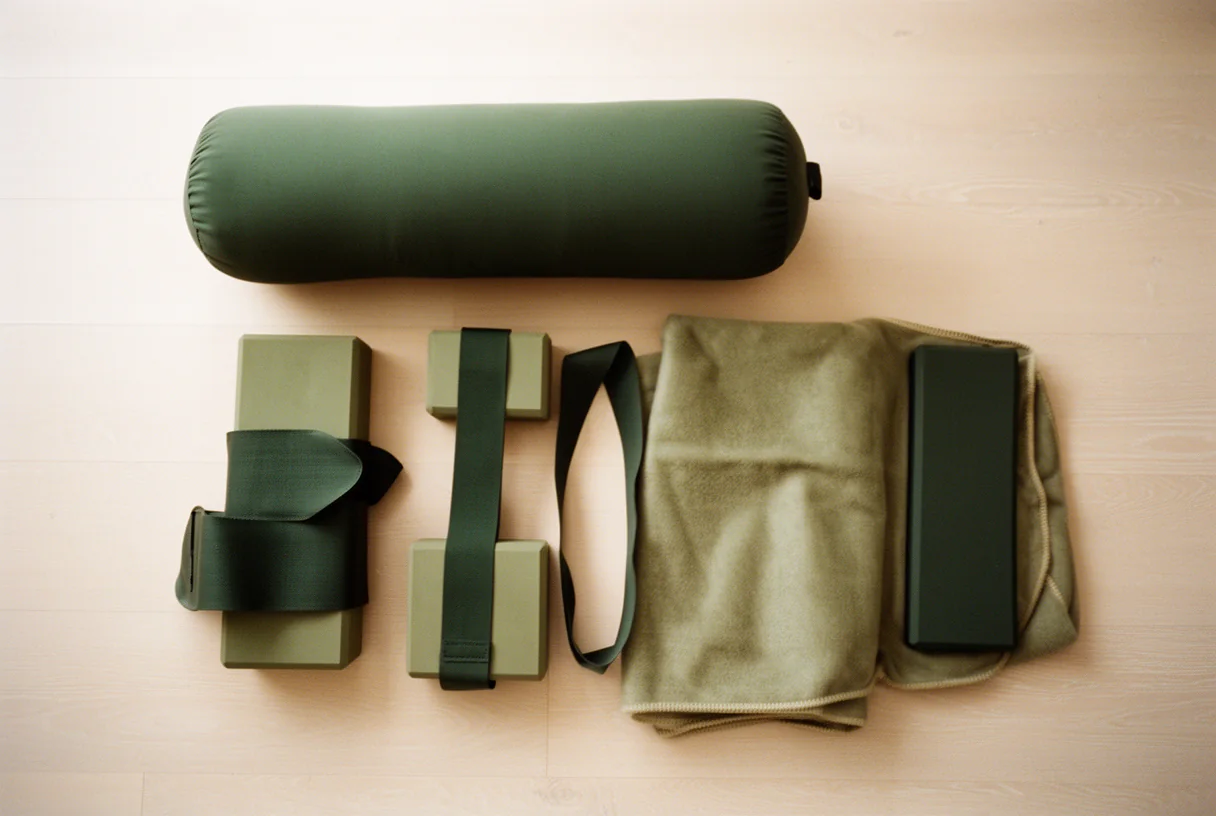
Blocks, straps, and bolsters aren't training wheels — they change the geometry of a pose so today's body can do the pose's actual work.