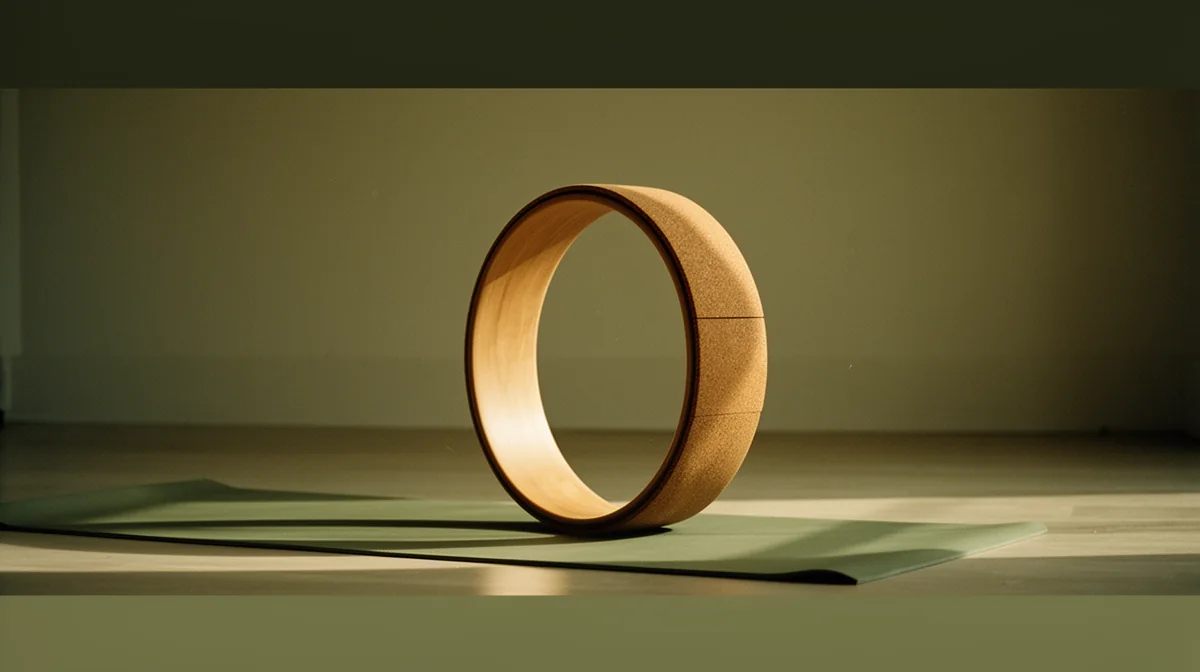
How to Use a Yoga Wheel: Backbends With a Spotter
The wheel looks like an influencer prop and works like a patient spotter — supported spinal extension, chest opening, and a safe runway toward deeper backbends.
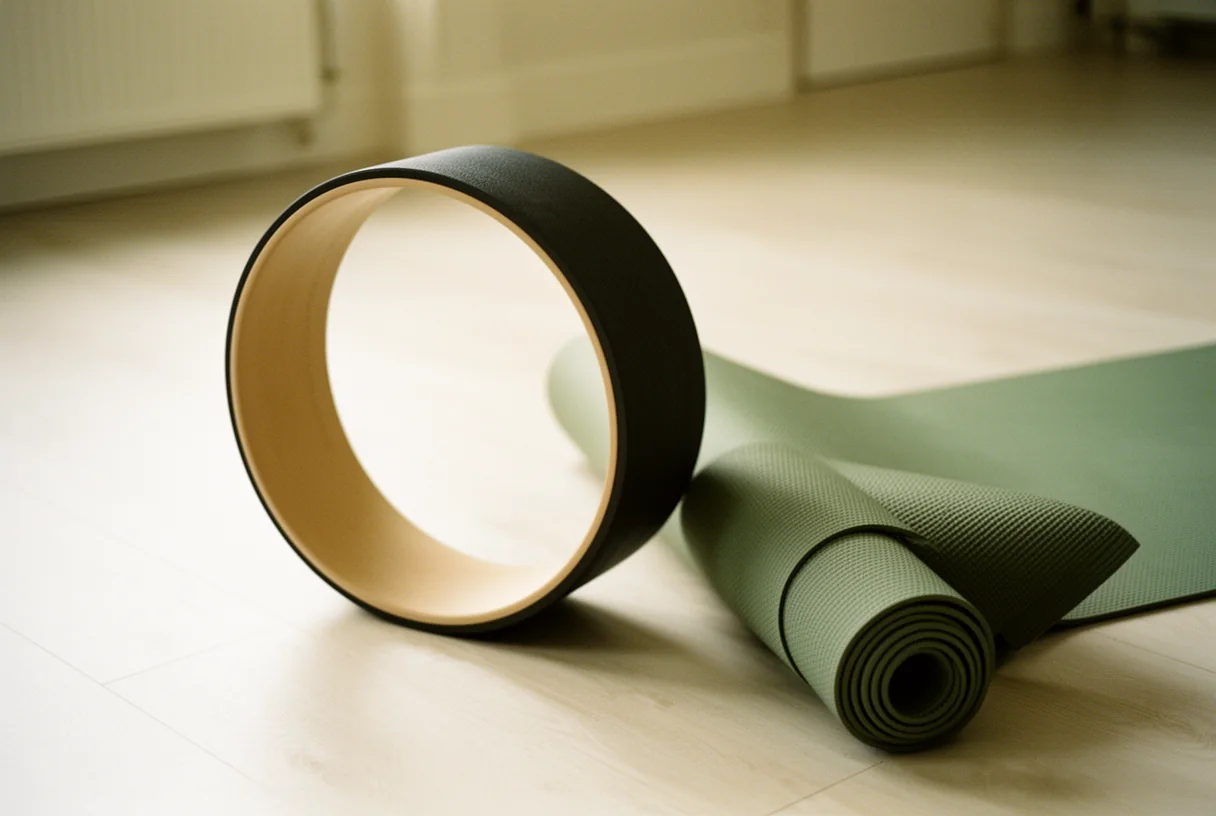
The yoga wheel arrived with Instagram and never quite shook the association — which is a shame, because underneath the aesthetic it's one of the most genuinely useful props for the single most common structural complaint of modern bodies: a thoracic spine (the upper and mid back) frozen into a forward curve by years of screens. The wheel supports the spine through extension the way a spotter supports a lift: it carries the load while your body relearns the range.
One honest disclaimer before the fun: the wheel is a mobility tool, not a treatment. For ordinary stiffness it's excellent. For actual back pain, injuries, or anything involving nerve symptoms, it's a conversation with a professional first.
The flagship: the supported roll
Sit on the floor, knees bent, the wheel snug against your spine. Lean back onto it, hands behind head or reaching overhead, feet planted — and slowly roll yourself an inch or two up and down, letting the wheel travel along the spine between the shoulder blades and the mid-back.
Three details make or break it:
- The head rests. Either on the wheel or supported by your hands — a hanging head turns a spinal stretch into a neck argument.
- Knees do the driving. Bend and straighten the legs to move the wheel; the spine just rides.
- Exhale into the extension. The spine yields on the exhale (the breath guide explains why); two minutes of slow rolling with deliberate exhales outperforms ten of bracing.
First sessions can feel intense and sound eventful — a percussion section of harmless pops as stuck segments move. A blanket draped over the wheel softens the pressure for sensitive spines, which is why one's listed in the gear picks alongside.
The wheel carries the load while your body relearns the range — a spotter, not a stunt.
Static holds: the desk-day reset
Park the wheel under the peak of the upper-back curve (bra-line height), drape over it, arms wide or overhead, and simply breathe for sixty to ninety seconds. This is the wheel's version of supported fish — a passive, time-based counter-shape to the laptop hunch. Done most evenings, it's the cheapest posture intervention there is; the wheel's curve reaches the exact segments that flat-floor backbends skip.
The runway toward deeper backbends
For practitioners working toward Wheel pose (Urdhva Dhanurasana), Camel, or drop-backs, the wheel is a patient intermediary:
Supported Camel. Kneel with the wheel behind you against the thighs, and lean back over it, letting it roll up the spine as you go. You get Camel's full front-body opening with the spine supported at every degree — and an exit (roll forward) that's always available.
Wheel-assisted bridge. Lying with the wheel under the upper back, press into the feet and let the chest open over it — the shape of full Wheel pose with a fraction of the load, teaching the shoulders and chest where they'll eventually need to go.
Strength on top. Forearms or palms on the wheel in plank turns it into an instability trainer for the shoulders and core. Different muscle group, same prop — and a sign you've graduated from victim to operator.
What the wheel is not for
Standing balance tricks on the wheel belong to people whose social feeds depend on them. Rolling the lower back aggressively under full body weight is also a skip — the lumbar spine wants stability, not grinding; let the wheel live between the shoulder blades and mid-back where the stiffness actually is. And the wheel is not a massage substitute for acute muscle spasm; warmth, gentleness, and patience beat pressure there.
Buying notes
The standard 12-inch (30cm) diameter suits most adults and most uses; smaller wheels (6–10") target the upper back more sharply and feel more intense, not less. Look for a stated weight capacity comfortably above your own, a padded surface thick enough to dull the plastic, and a width around 12–13cm — narrower wanders, wider bridges the spine's groove nicely. The cork-and-TPE builds are pleasant but not necessary. Mid-priced is the sweet spot; the picks alongside this article are the proven, boring, strong ones.
Two minutes draped over a wheel undoes a quantity of laptop posture that should honestly require a prescription. Let the influencers keep the handstands on it — the real product is the exhale halfway through the roll, when a week of desk compresses out of the chest in one long breath.
Keep reading
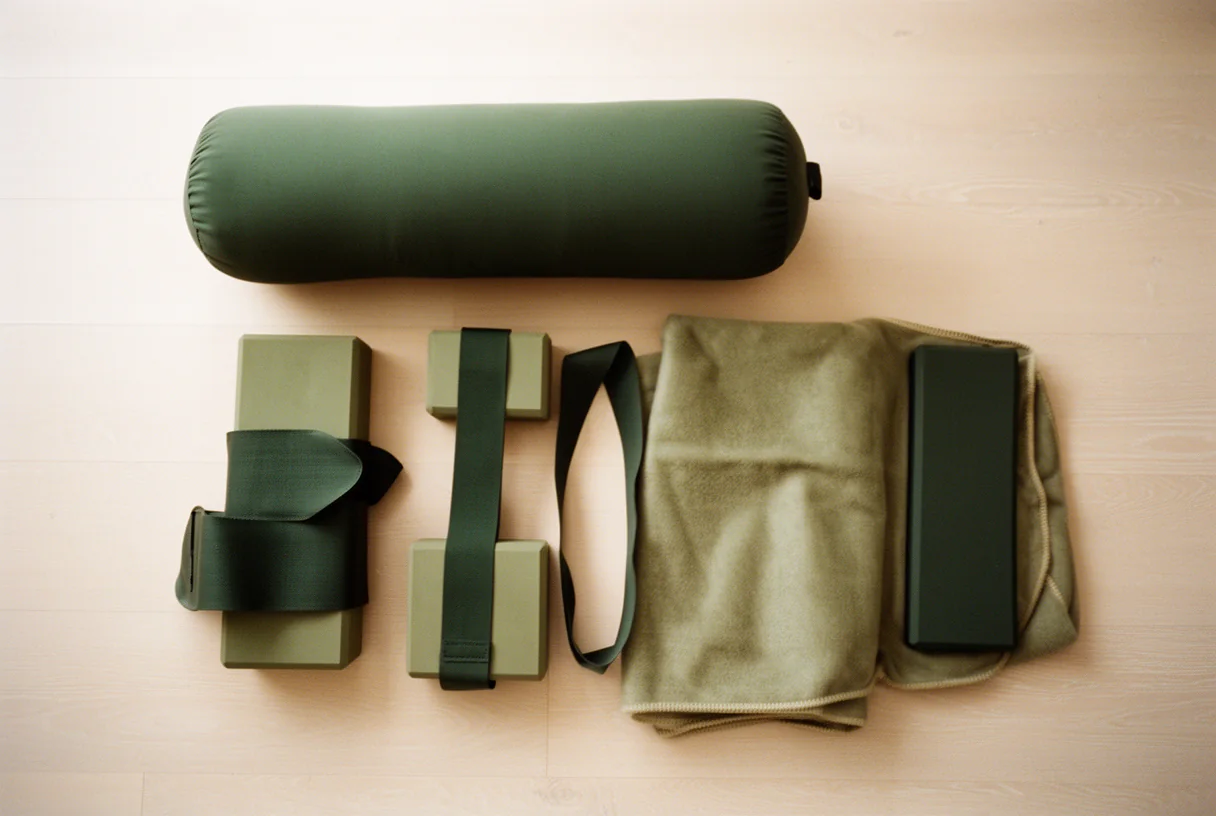
Props and Modifications: Bringing the Pose to You
Blocks, straps, and bolsters aren't training wheels — they change the geometry of a pose so today's body can do the pose's actual work.
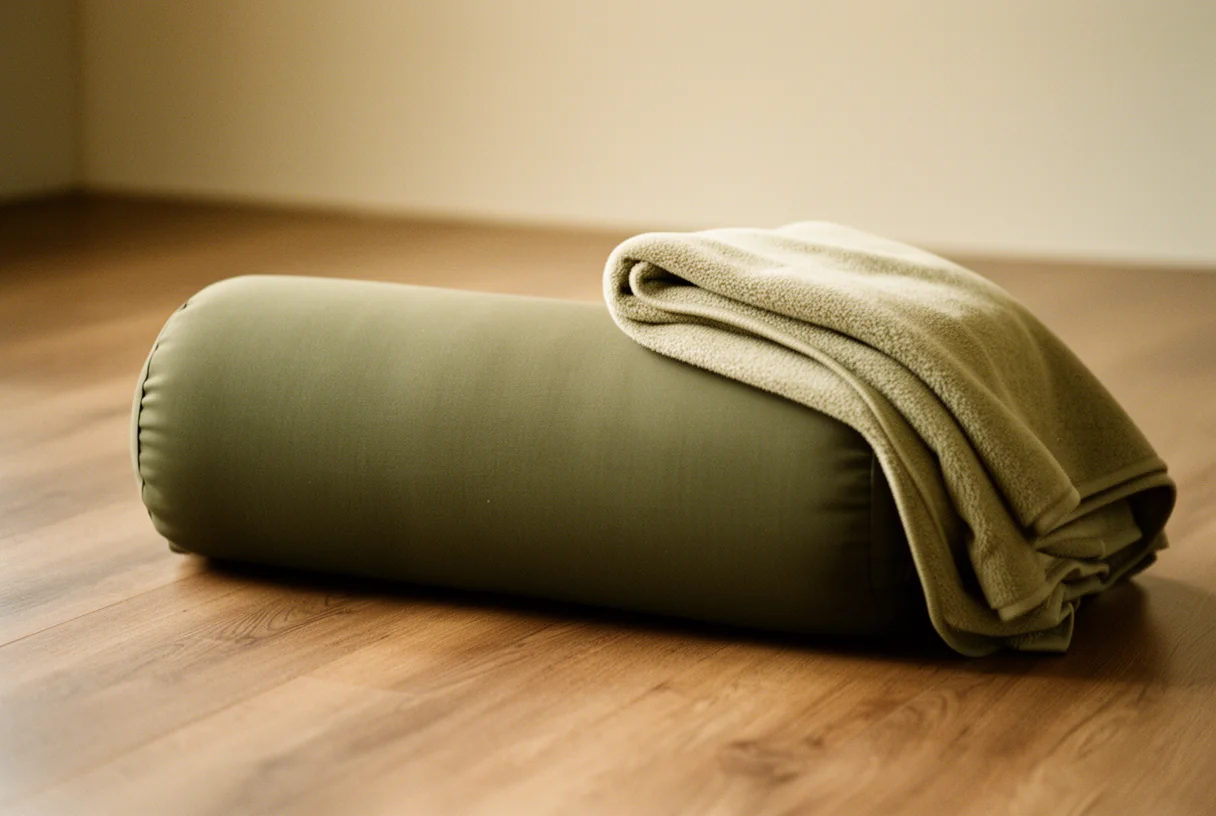
How to Use a Bolster: Support That Lets You Let Go
Restorative poses work by removing every job the muscles have — and the bolster is how. Five supported shapes, hold times, and what to look for when b
Breath as the Anchor: Three Patterns That Change Your Practice
Why the breath leads the movement, what your nervous system does with it, and three breathing patterns — ujjayi, even breath, extended exhale — to pra