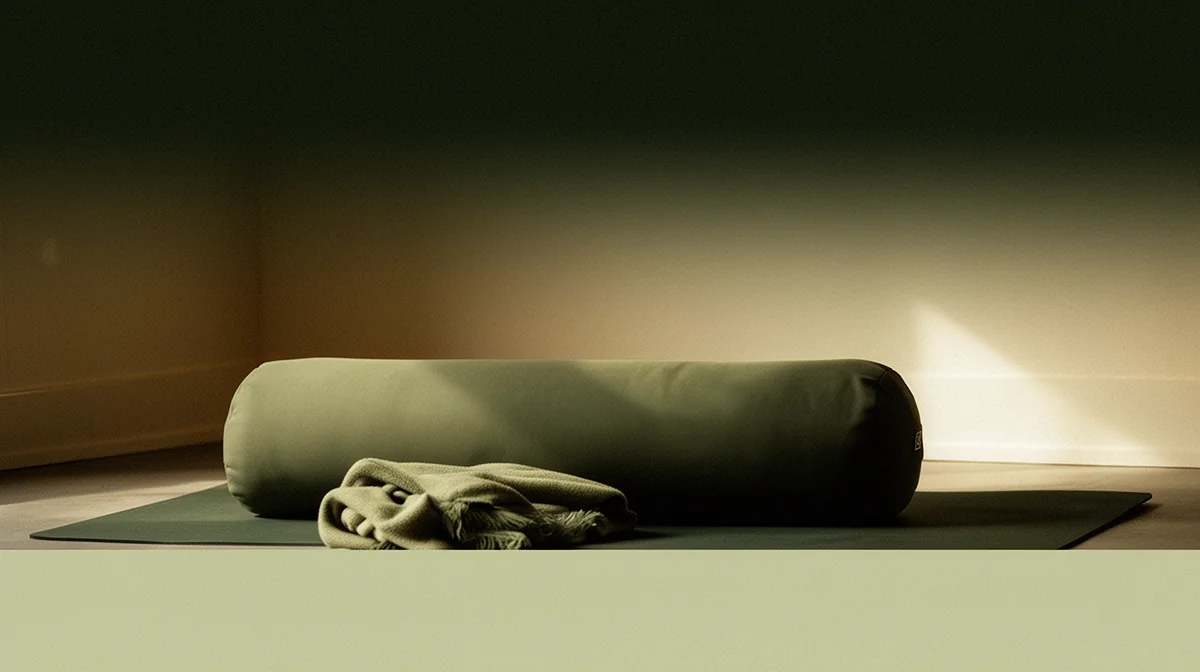
How to Use a Bolster: Support That Lets You Let Go
Restorative poses work by removing every job the muscles have — and the bolster is how. Five supported shapes, hold times, and what to look for when buying.
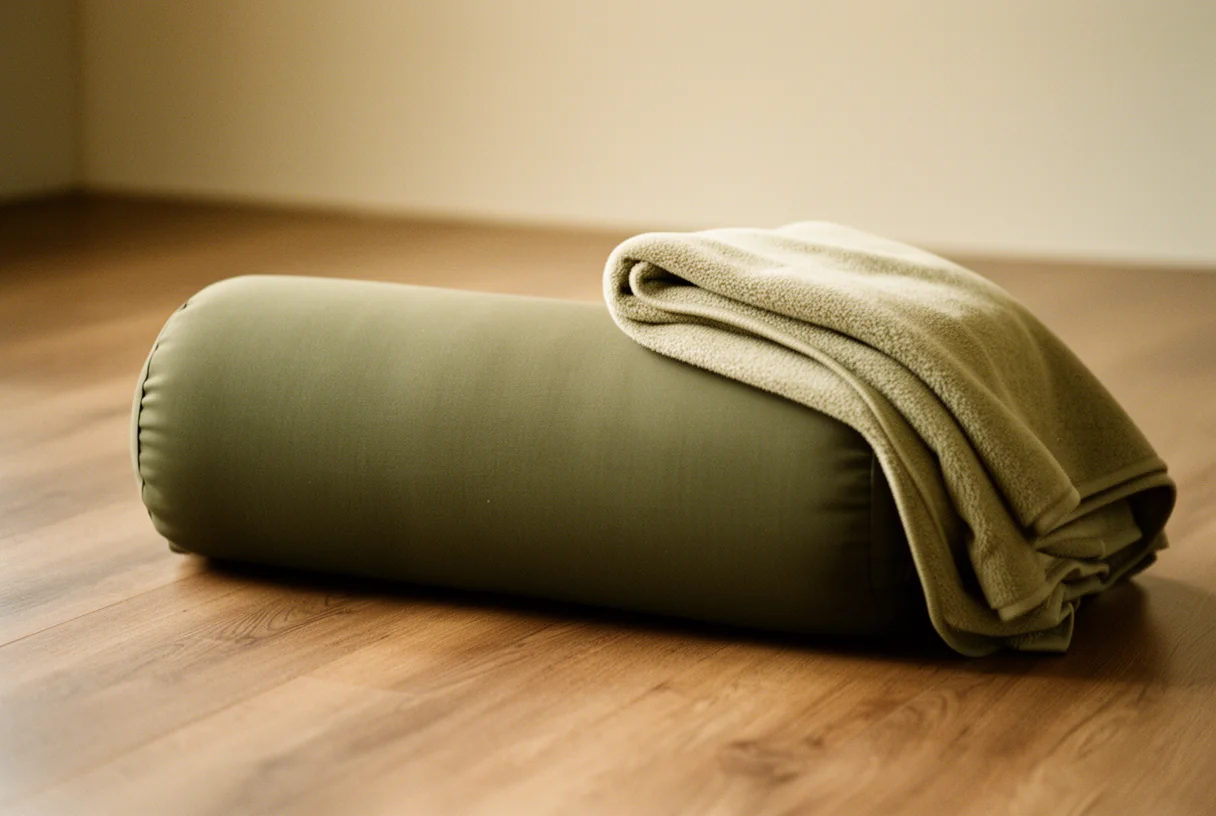
Restorative yoga has one mechanism: when the body is supported so completely that the muscles have no job left, the nervous system stops broadcasting "ready" and starts broadcasting "safe." Heart rate drifts down, breath lengthens on its own, and the tissue tension you couldn't stretch out simply stops being maintained. The bolster is the instrument of that mechanism — a firm, calm shape whose entire purpose is to be leaned on without argument.
The skill of bolster work is almost embarrassingly simple, and most people still skip it: add support until there is nothing left to hold. If any part of you is working — a hovering knee, a bracing neck — that part gets a prop too.
Supported Fish: the desk-day antidote
Sit with the bolster lengthwise behind you, its short end against your sacrum, and lie back along it so the spine is supported from low back to head. Arms fall open to the sides, palms up. Legs long, or soles together with knees wide (a cushion under each knee — see the rule above).
This is the gentle opposite of every hour you've spent rounded over a screen: chest open, shoulders draped, breath moving into the front body. Five to ten minutes. If the lower back grumbles, slide the hips a few inches away from the bolster's end so the curve softens.
Legs draped, mind off: supported rest
Knees over the bolster in Savasana. The simplest upgrade in restorative practice: bolster under the knees, lower back settles flat, and the hip flexors — chronic over-workers — finally go off shift. Savasana with this support frequently goes a layer deeper than without.
Legs up the wall, hips on the bolster. Bolster parallel to the wall, hips on it, legs up. The slight lift turns a good pose into a mild, calming inversion. The exit is part of the pose: roll to one side and pause before sitting up.
Add support until there is nothing left to hold — that's the entire skill.
Supported folds: the surrender versions
Child's Pose over the bolster. Knees wide, bolster lengthwise between them, torso along it, head turned to one side (switch halfway). The bolster carries the torso so the hips and back can release without the front body working. This is the pose to keep in your pocket for the genuinely terrible day.
Seated fold onto the bolster. Sit in a wide or cross-legged seat, bolster (or two, stacked, or bolster-on-block ramp) in front, and fold the torso onto it — cheek down, arms draped. The fold goes only as deep as the support allows, which is the point: a fold with a landing place is a fold the body trusts.
Side-lying and the pregnant practitioner
A bolster between the knees and ankles in side-lying makes it a legitimate long-hold resting pose — and for pregnancy, side-lying over and around bolsters becomes the backbone of supported practice when lying on the back stops being recommended. A second bolster or rolled blanket supporting the top arm completes the cocoon.
Hold times and the honest fidget
Restorative holds run five to twenty minutes — long enough to bore the part of the mind that treats every pose as a task. The first ninety seconds almost always include fidgeting; that's the body filing its objections. If a genuine discomfort persists past two minutes, fix the setup (more support, smaller shape) rather than enduring — endurance is the exact opposite of the practice. A timer with a gentle bell removes the "how long has it been" loop entirely.
Pair every long hold with the extended-exhale breathing from our breath guide and the effect roughly doubles.
Buying notes
Firmness is the whole product. A bolster that yields like a pillow gives the body nothing definite to release onto; the good ones feel almost architectural. Rectangular bolsters are flatter and more stable — the default recommendation, especially for spine-along-it poses. Round bolsters open the chest more dramatically and roll slightly, which some bodies love under the knees. Standard size suits most adults; the picks alongside this article are firm, well-covered versions that hold their shape for years. Until then, two firm couch cushions stacked in a tight roll inside a blanket are a workable counterfeit — bulkier and softer, but enough to learn the shapes on.
One honest warning: a bolster is the gateway prop. The practice it unlocks is the one most modern bodies are starving for, and it tends to colonize the back half of home practices within a month. Let it.
Keep reading
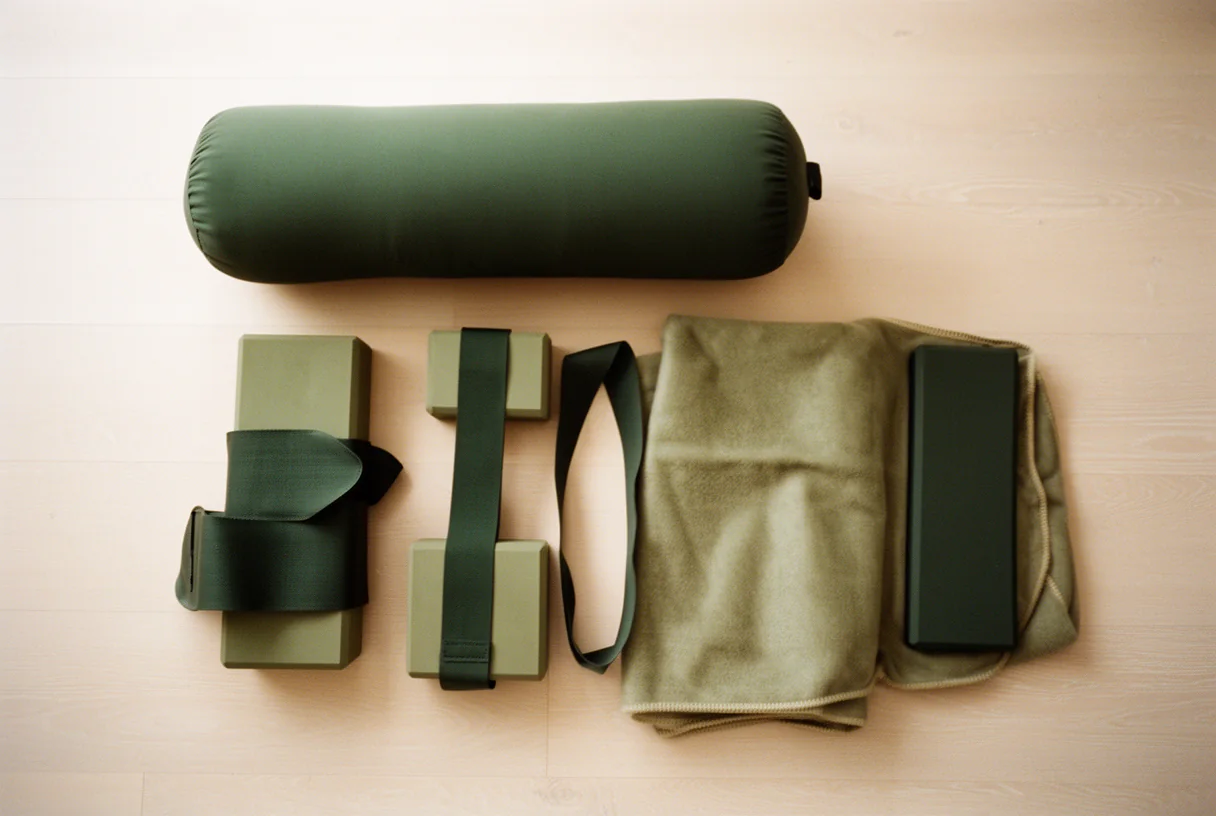
Props and Modifications: Bringing the Pose to You
Blocks, straps, and bolsters aren't training wheels — they change the geometry of a pose so today's body can do the pose's actual work.
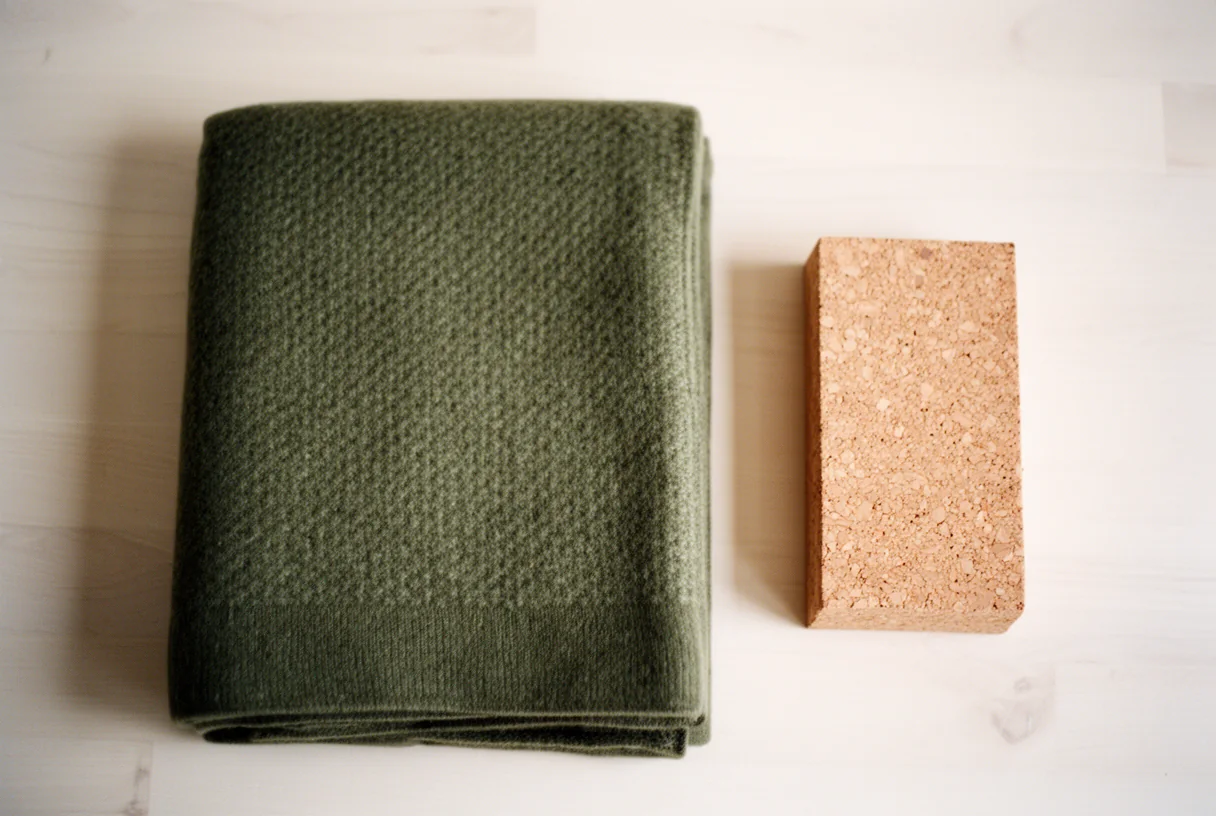
How to Use a Yoga Blanket: The Most Underrated Prop in the Room
Fold it, roll it, stack it, wear it — the humble blanket pads knees, levels hips, supports necks, and warms Savasana, all for the price of lunch.
Breath as the Anchor: Three Patterns That Change Your Practice
Why the breath leads the movement, what your nervous system does with it, and three breathing patterns — ujjayi, even breath, extended exhale — to pra